



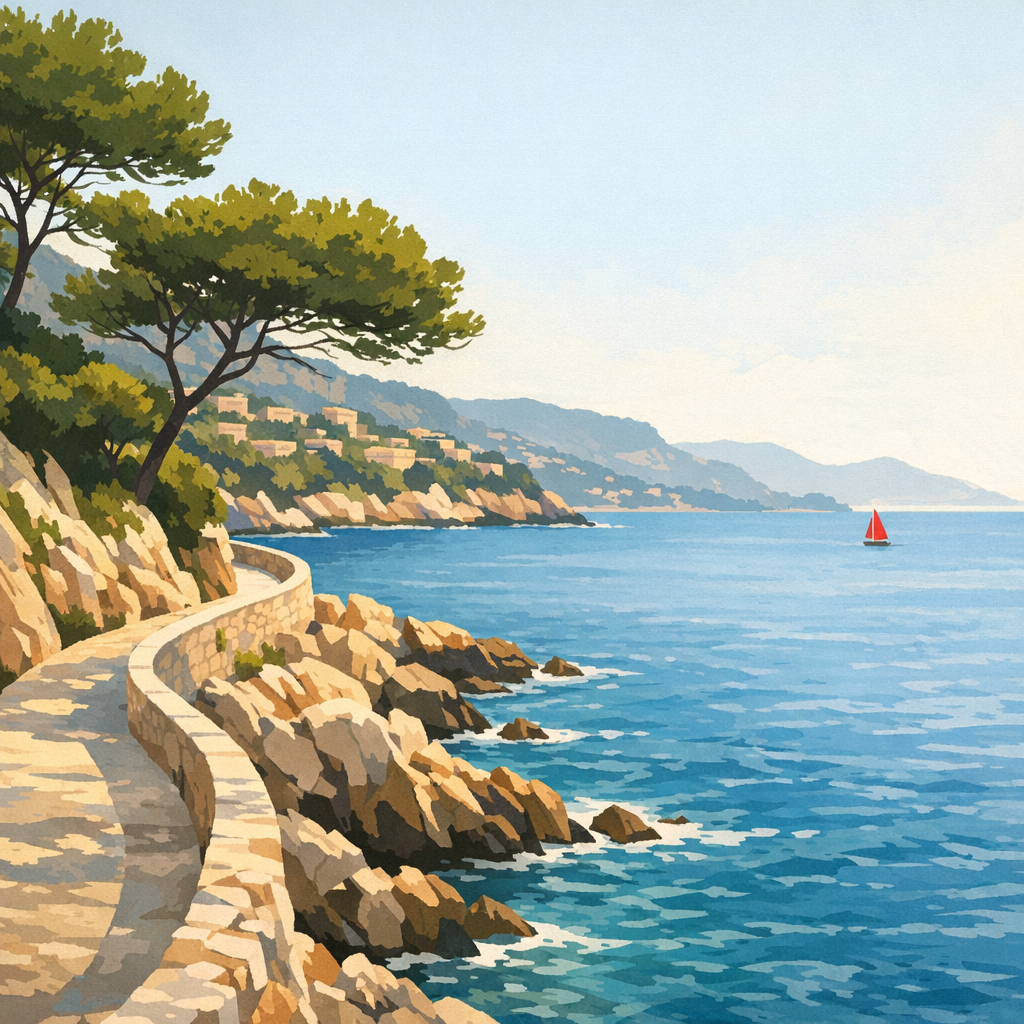
Monaco Guide · Coastal Walk
Just beyond Larvotto, Monaco’s polished seafront gives way to one of the Riviera’s most rewarding coastal paths. This practical route links the Principality with Roquebrune-Cap-Martin, combining an easy urban approach, open Mediterranean views and a convenient train journey home.
Why this walk is worth crossing the border for
Monaco is compact enough that a walk can change character remarkably quickly. Begin beside the shaded promenade and beach at Larvotto, continue east towards the French border, and the dense city gradually recedes. The Sentier Le Corbusier then traces the edge of Roquebrune-Cap-Martin above rocky coves, Mediterranean planting and villas set into the coast.
This is not simply a longer version of a central Monaco waterfront stroll. It is a point-to-point outing with a distinct rhythm: urban promenade first, coastal footpath second, regional train back. That makes it particularly useful for visitors who want a scenic excursion without committing to a car or an all-day hike.
Know which distance you are reading
Official descriptions do not all measure the same section. Roquebrune-Cap-Martin describes the named Sentier Le Corbusier as approximately 2 km, while regional tourism material uses longer figures for coastal itineraries that continue around Cap Martin. Starting in Larvotto also adds an urban approach. Plan by time and endpoint rather than treating one distance as definitive.
The route, step by step
Larvotto promenade
Start on Monaco’s main beach promenade. It is a comfortable place to organise water, sun protection and anything else you need before leaving the Principality’s denser public realm.
Continue east towards France
Follow the coastal direction beyond Larvotto. The approach is urban and should be treated as a connection to the trail, not as one uninterrupted boardwalk. Respect signs, crossings and any temporary access instructions.
Join the Sentier Le Corbusier
Once on the marked coastal path, slow down. The pleasure lies in the changing views, shaded stretches and glimpses of architecture between the railway, cliffs and sea.
Finish at the station
Roquebrune-Cap-Martin railway station gives the walk a practical endpoint. Regional trains serve the coastal line, but check live departures before setting out and keep enough flexibility for service changes.
What the path is really like
The municipal description calls the walk easy to moderate and describes an improved path, but “coastal promenade” should not be mistaken for a completely level urban pavement. Expect sections exposed to sun, changes underfoot and the occasional confined or stepped passage. Comfortable closed footwear is a better choice than beach sandals.
The route rewards an unhurried pace. Views open towards Monaco behind you, while the Cap Martin landscape ahead feels markedly greener. The coast also carries an architectural story: the path provides access to the Eileen Gray–Le Corbusier site, including Villa E-1027 and Le Corbusier’s Cabanon. These are not casual walk-in attractions; official information states that visits are guided and require advance booking. The walk remains worthwhile even when you do not enter the heritage site.
Choose the right direction
Walking from Monaco towards Roquebrune-Cap-Martin gives the day a simple structure: begin somewhere familiar, move into a quieter landscape, then return by train. It also lets you decide early whether the weather feels suitable before committing to the trail.
The reverse direction is equally sensible. Arriving by train at Roquebrune-Cap-Martin places you close to the path, and finishing at Larvotto leaves you beside cafés, the beach and onward connections through Monaco. If afternoon heat is a concern, choose the direction and start time that keep the most exposed portion away from the hottest hours.
A scenic path, not an all-conditions route
The official tourism listing states that access is subject to favourable weather. After heavy rain, during high winds or in exceptional coastal conditions, check current local information and be prepared to change plans. Temporary restrictions always take priority over an online itinerary.
Practical planning
- ○Carry water; do not rely on finding a service at the exact moment you need it.
- ○Use sun protection even outside midsummer, as exposed stretches can feel bright and warm.
- ○Wear shoes with reliable grip and keep both hands free on narrower passages.
- ○Check the regional train timetable on the day of your walk.
- ○Allow extra time for viewpoints and photographs instead of treating the path as a speed challenge.
- ○Keep noise low and stay on the public route around residential and protected heritage areas.
How to make it part of a Monaco day
For a gentle combination, spend the morning around Larvotto, then walk east after an early lunch and return by train. ViewMonaco’s Mareterra to Port Hercule waterfront walk is a better separate choice when you want to remain entirely within Monaco and focus on the Principality’s urban shoreline.
If rail is part of your plan, review the Monaco Train Station guide before leaving. Monaco-Monte-Carlo station has several entrances at different levels, so knowing the most convenient exit can save an unnecessary climb after the return journey.
Official planning sources: the Town of Roquebrune-Cap-Martin’s Sentier Le Corbusier guide, the Menton, Riviera & Merveilles trail listing, Visit Monaco’s Larvotto information and TER information for Roquebrune-Cap-Martin station. Conditions and transport can change, so verify them before departure.
Build the rest of your Monaco itinerary
Pair the coastal path with neighbourhood guides, cultural stops and practical information for a day that suits your pace.
