



Monaco Guide · Crowd-Smart Planning
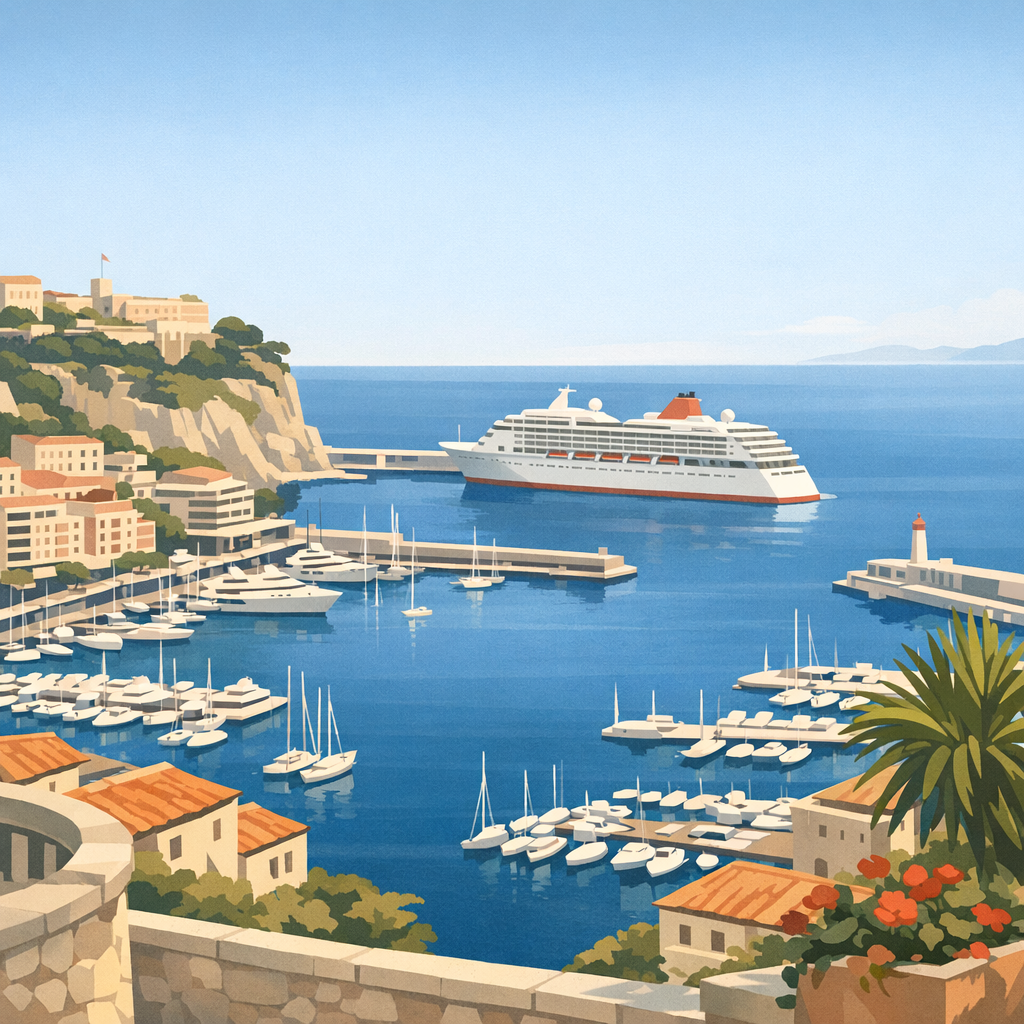
A cruise call does not make Monaco a place to avoid. It does change the rhythm around Port Hercule and the most recognisable sights, especially when organised groups move through the Principality at similar times. A better day starts with one quick schedule check, then uses Monaco’s compact geography to stay half a step away from the busiest flow.
First, find out whether a ship is due
The official Ports of Monaco cruise page publishes planning documents for current and upcoming seasons. It is the sensible starting point because a ship visible offshore or beside the sea wall does not tell you when passengers will come ashore, when excursions will depart or whether operations have changed.
Treat the schedule as a planning signal, not a minute-by-minute promise. Weather, port operations and itinerary changes can alter a call. On the morning itself, combine the official port information with live transport notices and what you can observe locally.
What the schedule can and cannot tell you
A listed call suggests that Port Hercule, routes towards Monaco-Ville and headline attractions may receive a concentrated wave of visitors. It does not mean every street will be busy. La Condamine, Monte-Carlo, Larvotto and Fontvieille each have their own rhythm, so moving one district away can change the experience quickly.
Choose a plan based on your real priority
There is no single crowd-avoidance route. The right sequence depends on whether Monaco-Ville is essential, whether you prefer museums or open-air spaces, and how much walking you want to do. These three approaches cover the most common situations.
See the Rock first
Use this when the Palace area, Cathedral or Oceanographic Museum is the main reason for your visit. Go early and complete that priority before coach groups settle into their excursion sequence. Leave secondary stops flexible.
Reverse the classic route
Begin around Monte-Carlo or Larvotto while many day visitors move towards Monaco-Ville. Cross back later, once the first excursion wave has dispersed or returned towards the port.
Build a local day
Stay within one district, choose a long lunch or one cultural visit, and let the headline circuit go. This is often the most comfortable choice when you have already seen Monaco’s principal landmarks.
A flexible cruise-day sequence
The following is a planning framework rather than a fixed itinerary. It works because every stage has an easy exit: you can shorten it, swap districts or pause without losing the shape of the day.
Check the port and one transport source
Look at the official cruise planning page, then open CAM’s real-time information. The official Monacobus service provides scheduled and live arrivals, vehicle location where available, network alerts and, in some cases, crowding information.
Protect your one non-negotiable stop
If you have a must-see attraction, make it the first substantial visit. Do not build the morning around a chain of minor stops that leaves the priority until the same period as organised excursions.
Move sideways, not simply onwards
When a route feels congested, change district rather than queue by default. A bus or a lift-assisted transfer can take you away from the port-to-Rock axis without turning the day into a long cross-city trek.
Eat away from the excursion clock
Reserve when a particular restaurant matters. Otherwise, keep two areas in mind and decide based on what you find. A slightly earlier or later meal can be more useful than chasing a supposedly secret address.
Reassess before returning to the headline sights
Check whether the port-facing routes have eased. If they have, revisit the area you deferred. If not, continue with Fontvieille, Larvotto or a slower Monte-Carlo section instead of forcing the original plan.
Use transport as a pressure valve
Monaco’s short distances can be deceptive because the city rises steeply from the water. On a busy day, repeatedly climbing between Port Hercule, the Rock and Monte-Carlo is tiring and can funnel you into the same routes as everyone else.
The official Monacobus information is useful for checking the next arrivals rather than waiting without context. Allow extra time and avoid relying on a single tightly timed connection: traffic, events and concentrated passenger movements can affect a journey.
For a short crossing of Port Hercule, ViewMonaco’s published Bateau Bus guide explains the water shuttle and the details worth checking before you use it. It can be a pleasant alternative to walking around the harbour, but it should remain an option rather than a critical link in a rigid schedule.
Small decisions that make the day calmer
One timed visit or restaurant reservation can anchor the day; too many remove your ability to adapt.
Choose a preferred area and one nearby alternative instead of building a city-wide backup plan.
If a museum entrance is crowded, enjoy the surrounding streets or viewpoint and return later if practical.
Compact bags make buses, lifts and changes of level easier when foot traffic increases.
Port Hercule is both a destination and an operating port; follow barriers, signs and staff directions.
A cruise call may be only one factor. Sporting, cultural or conference dates can have a larger effect.
If you are arriving on the cruise ship
Your priorities are different from those of a hotel guest or day visitor. Return time and ship instructions come first, and your usable time ashore may be shorter than the published call. ViewMonaco’s self-guided four-hour Monaco cruise itinerary is designed specifically around that constraint, with a clear return buffer.
If you are not a cruise passenger, that itinerary is still useful as a map of the likely headline flow. You can deliberately reverse it, postpone one stage or choose a parallel district while short-stay visitors complete their core route.
Three live checks before you leave
- Check the official Ports of Monaco cruise planning.
- Review CAM lines, alerts and real-time departures.
- Confirm opening hours or reservations directly with any attraction or restaurant that is essential to your day.
Planning a short call from the ship?
Use a route built around realistic walking time, transport choices and a protected return margin.
