



Choose the walking route when
You are comfortable with a sustained uphill section, steps and uneven historic streets. It offers the clearest sense of Monaco’s dramatic levels and keeps you independent of traffic or waiting times.
Make the most of a short Monaco cruise call with a realistic four-hour route from Port Hercule to Monaco-Ville, plus transport choices and a safe return buffer.
Monaco Guide · Cruise Stop
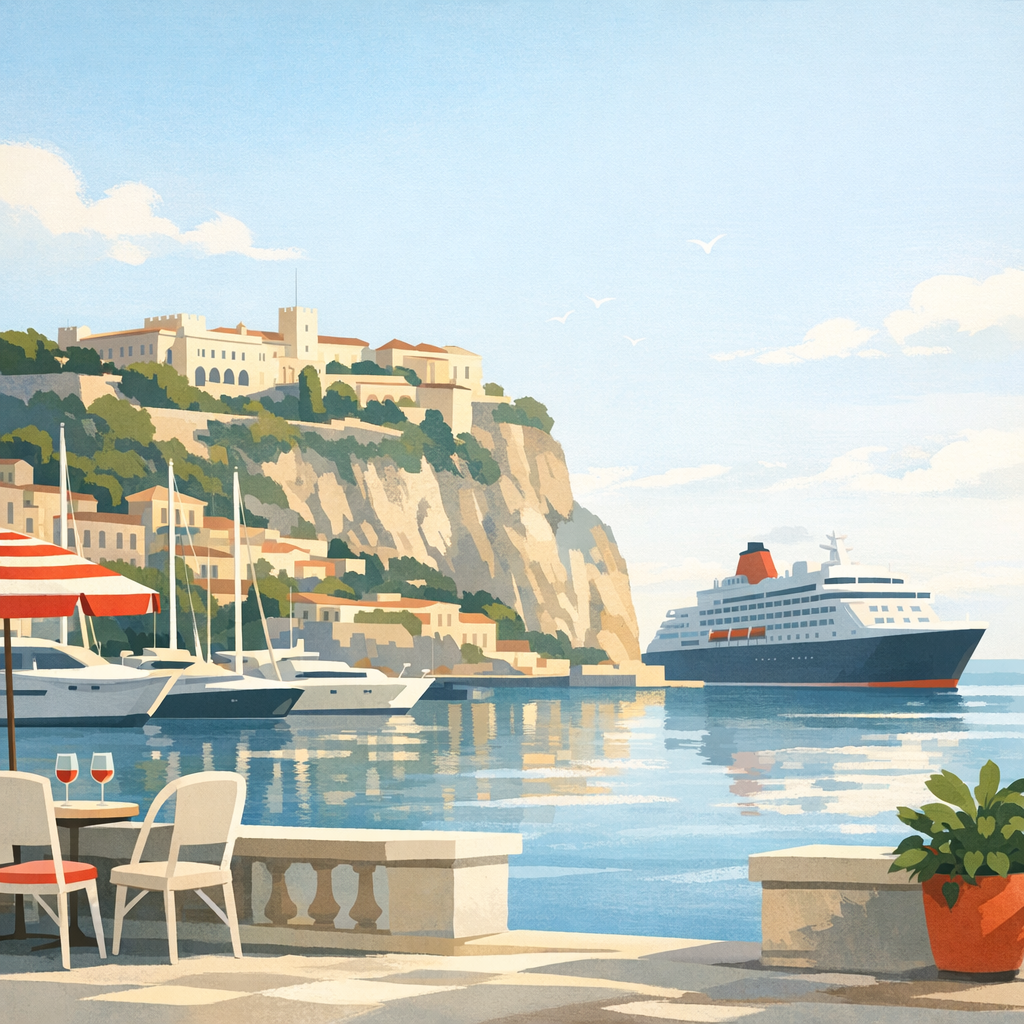
Four hours ashore is enough for a memorable first look at Monaco, provided the route starts with the ship’s return instructions and stays close to Port Hercule. This self-guided plan prioritises the Rock, Monaco-Ville and La Condamine, with a deliberate buffer before all aboard.
Port Hercule is Monaco’s cruise gateway, but the arrival experience is not identical for every call. Some ships can berth at the port’s outer sea wall, while others may remain offshore and transfer passengers by tender. The official Ports of Monaco site notes that the sea wall can receive cruise ships up to 300 metres; your cruise line remains the authority on the day’s gangway or tender point.
Do not start the clock from the scheduled arrival time. Start it when you are ashore and have confirmed the final return time, the correct embarkation point and whether a tender queue could add delay. Take a photograph of the ship’s notice before leaving the terminal area.
Aim to be back in the port area at least 45 to 60 minutes before the ship’s stated all-aboard time. Allow more when tenders, security checks, mobility needs, major events or poor weather could slow the return. If your cruise line gives a larger margin, follow it.
This plan treats four hours as total shore time, including the return margin. It avoids Monte-Carlo and Casino Square because crossing to the opposite side of the Principality introduces unnecessary pressure on a short cruise call.
Confirm the exact return point, then follow the harbour towards La Condamine and Place d’Armes. Port Hercule sits below the Rock, so the palace above provides a useful visual reference. Keep the first section simple rather than detouring around the marina.
From the Place d’Armes side, the traditional approach climbs the Rampe Major to Monaco-Ville. The gradient and steps make this the most demanding part of the route. Travellers who prefer to save energy can use a local bus towards Monaco-Ville; CAM lines 1 and 2 serve the Rock, but live stops and service changes should be checked on the day.
At Place du Palais, pause for the panorama over Port Hercule and the eastern side of Monaco. If your visit naturally reaches the square before 11:55, the daily changing of the guard may fit; do not build the entire route around it if timing is tight.
Continue through the old-town streets towards Monaco Cathedral, then the Saint-Martin Gardens and the exterior of the Oceanographic Museum. This compact sequence gives the short visit its strongest mix of history, architecture and Mediterranean views without requiring a timed admission.
Keep interior visits selective. Cathedral access can be affected by services, ceremonies or local arrangements, while the gardens and public spaces are better suited to a flexible cruise schedule.
Retrace the Monaco-Ville route towards Place du Palais, then descend to Place d’Armes on foot or take a bus back towards the port. Monaco’s changes of level can make a short map distance feel longer. ViewMonaco’s guide to public lifts and escalators is useful background, but follow current signs rather than relying on a single fixed connection.
If the timetable remains comfortable, use Place d’Armes or the lower streets of La Condamine for a short coffee, snack or look around. Opening hours vary, so treat this as flexible time rather than a promised stop. Skip it immediately if the climb, crowds or transport have taken longer than expected.
Walk back to the confirmed cruise meeting point and complete any port security or tender process. This final block is intentional. A cruise-stop itinerary succeeds when the last hour feels calm, not when one extra sight creates a missed sailing risk.
You are comfortable with a sustained uphill section, steps and uneven historic streets. It offers the clearest sense of Monaco’s dramatic levels and keeps you independent of traffic or waiting times.
You want to protect energy for Monaco-Ville or need a gentler ascent. Check the official CAM app, displays or website for live information; event days can alter normal circulation.
The Oceanographic Museum is one of Monaco’s major attractions, but a proper visit can consume most of a four-hour call. If it is your priority, make it the anchor: travel directly to Monaco-Ville, visit the museum, take a short old-town walk and return to Port Hercule. Do not attempt the full route above as well.
The museum’s official visitor information states that it is normally open daily except 25 December and the Formula 1 Grand Prix weekend. Hours, tickets and exceptional closures can change, so check the official site before sailing and again when you have connectivity ashore. For a broader shortlist, see ViewMonaco’s guide to attractions in Monaco.
The cleanest adjustment is to omit the La Condamine pause and head directly back to the port. If necessary, turn around after Place du Palais; the harbour panorama and the Rock still provide a coherent short visit.
Bring the cruise card and required identification, a charged phone, water and footwear suited to slopes. Keep the ship’s contact and emergency instructions available offline.
Use the official Ports of Monaco information for the port, CAM for bus updates and the relevant venue’s own site for admissions. Cruise-line instructions take priority over every independent guide.
Official planning sources: Ports of Monaco: Port Hercule, Compagnie des Autobus de Monaco, Prince’s Palace: changing of the guard, and Oceanographic Museum practical information. Always recheck live details for the date of your call.
Staying longer than a cruise call? Use ViewMonaco’s main guide to compare districts, attractions and practical itineraries across the Principality.
