



VIEWMONACO JOURNAL
Discover the ingredients, family traditions and regional context behind barbajuan, stocafi and sweet Monégasque fougasse.
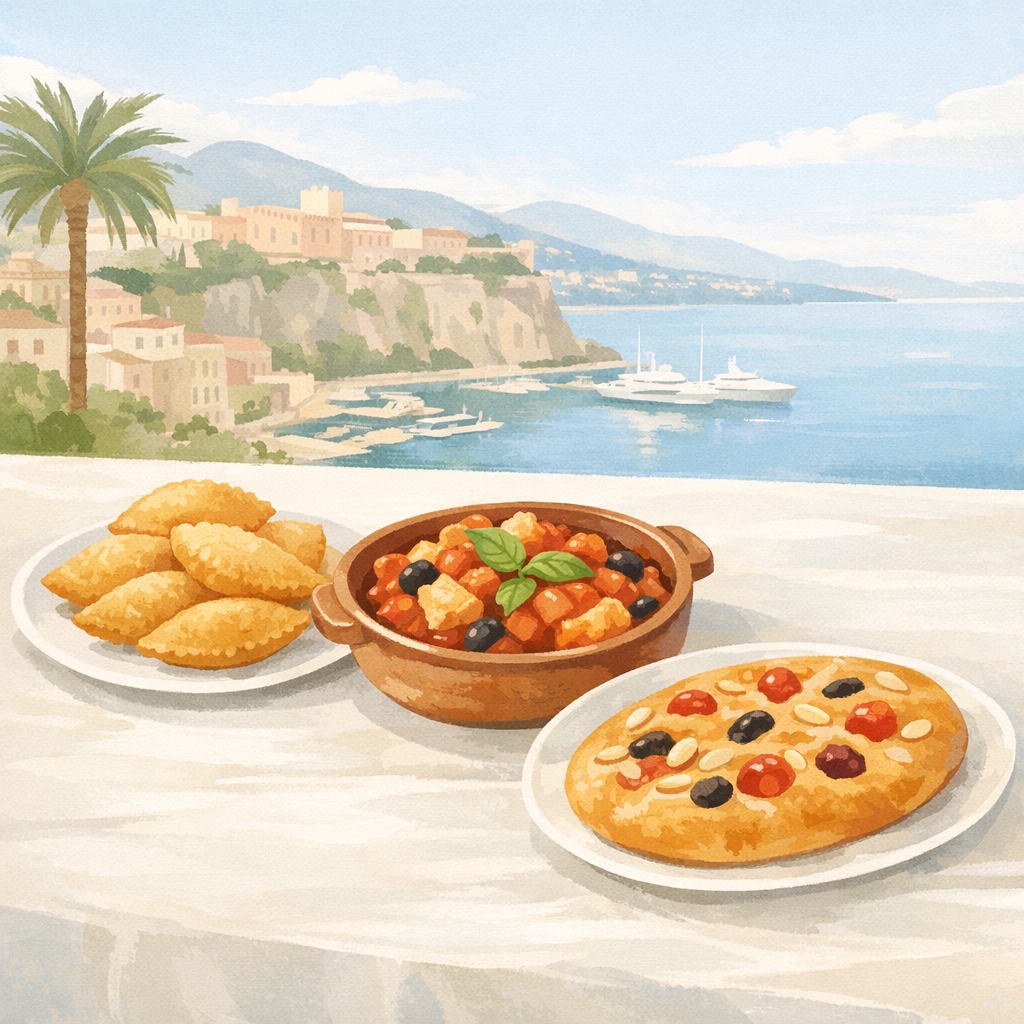
Monaco’s food heritage can be approached through three distinctive specialities: barbajuan, stocafi and Monégasque fougasse. One is a fried pastry filled with rice and chard, another is a cod stew built around tomato, olives and vegetables, and the third is a sweet preparation flavoured with orange, anise, nuts and dried fruit. Together, they offer a concise introduction to the ingredients, family traditions and regional influences associated with the Principality.
01
Three different expressions of Monégasque cooking
These dishes should not be reduced to a single idea of a national cuisine. Their forms and ingredients differ markedly: barbajuan centres on a filled pastry, stocafi places cod within a vegetable-rich stew, and fougasse combines sweetness with aromatic and fruit flavours.
That contrast is useful. It shows how culinary heritage can encompass everyday ingredients, celebratory associations and recipes passed between generations. It also encourages visitors to look beyond a checklist of famous foods and pay attention to what each preparation contains.
02
Barbajuan: rice, chard and family variation
France.fr identifies barbagiuàn, commonly rendered in English as barbajuan, as a fried pastry filled with rice and chard. Chard is especially significant because it connects the speciality with another part of the region’s food culture: the chard tart also mentioned in French tourism information about Monaco.
Barbajuan is not best understood as a completely standardised product. Monaco Tribune’s account of a traditional family recipe illustrates how knowledge of the dish may be preserved within households. Family recipes can vary, so one published version should not be taken as the definitive formula for every cook or kitchen.
The name also comes with a popular origin story. Monaco Tribune presents the “Uncle Jean” explanation as a legend rather than established history. It is therefore more accurate to treat that etymology as culinary folklore, not as a proven account of how barbajuan acquired its name. Readers interested in the documented family perspective can consult the Monaco Tribune feature on traditional barbagiuans.
03
Stocafi: cod with tomato, olives and vegetables
Stocafi is described in French tourism information as a cod stew prepared with tomato, olives and vegetables. This ingredient combination gives the dish a clear structure: fish at the centre, supported by produce and the pronounced presence of olives.
Its significance lies not only in the cod but in the way several ingredients are brought together in one preparation. Stocafi therefore provides a useful counterpoint to the compact, filled form of barbajuan. It belongs to the same culinary heritage while expressing that heritage through a stew rather than pastry.
No conclusion should be drawn that stocafi appears on every menu or is prepared every day. This guide concerns the dish’s place in Monégasque food culture, not guaranteed restaurant availability.
04
Monégasque fougasse: a sweet aromatic speciality
Monégasque fougasse is described as sweet and flavoured with orange, anise, nuts and dried fruit. Those ingredients are central to its identity: citrus supplies an aromatic note, anise adds another distinctive flavour, and the nuts and dried fruit contribute to the preparation’s character.
The word fougasse alone does not communicate everything that matters here. In Monaco’s culinary context, the combination of sweetness, orange, anise, nuts and dried fruit distinguishes this speciality. The France.fr overview of Monaco’s food and drink specialities provides further official tourism context for these traditional foods.
05
Markets and the wider regional setting
Monégasque cooking is presented alongside wider regional influences rather than as an isolated tradition. French tourism material mentions socca and chard tart in addition to barbajuan, stocafi and fougasse. These neighbouring references help explain why produce, filled preparations and familiar regional ingredients recur within descriptions of Monaco’s food culture.
The Condamine market culture is also part of this picture. A market offers context for understanding the ingredients behind local dishes, even when it should not be treated as a promise that every speciality will always be available. For practical background, see ViewMonaco’s guide to Monaco’s municipal markets and produce.
06
How to explore the heritage thoughtfully
- Begin with ingredients: look for rice and chard in barbajuan, cod with tomato, olives and vegetables in stocafi, and orange, anise, nuts and dried fruit in fougasse.
- Allow for variation: family recipes may differ, particularly where traditions have been handed down within individual households.
- Separate legend from evidence: the “Uncle Jean” story attached to barbajuan is presented as folklore, not confirmed etymology.
- Avoid assuming daily availability: heritage status does not mean that every restaurant or market stall serves each dish at all times.
Visitors can place this culinary introduction within a broader trip by consulting the ViewMonaco guide to Monaco. Approached with attention to ingredients and variation, these three specialities provide a grounded introduction to Monégasque food heritage without turning it into a fixed or uniform menu.
EXPLORE MORE
Discover more of Monaco
Practical information, local discoveries and trusted guides to the Principality.
