



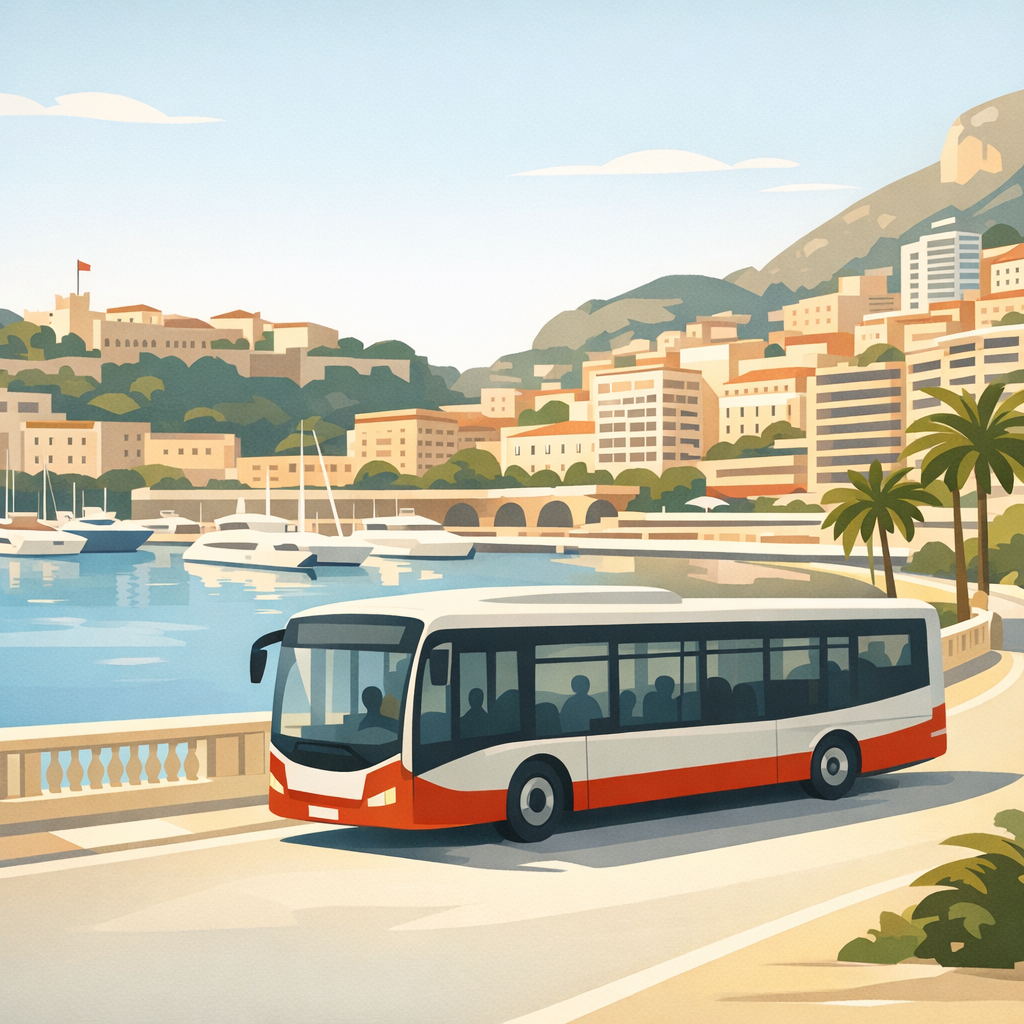
Monaco Guide · Easy City Day
Monaco is compact, but its steep levels can turn a short-looking walk into the hardest part of the day. This bus-led plan links three contrasting areas of the Principality while keeping climbs, long transfers and backtracking to a minimum.
Build the day around three stops, not the whole network
A low-walking day works best when the bus does the changes of level and your time on foot stays concentrated around each stop. The goal is not to ride every line or tick off every district. Choose a west-to-east sequence, leave room for a long lunch or museum visit, and treat any extra stop as optional.
CAM lists line 1 between Monaco-Ville and Saint-Roman, line 2 between Monaco-Ville and Jardin Exotique, and line 6 between Fontvieille and Larvotto. Routes and temporary diversions can change, particularly during major events, so use the official CAM live information on the day.
Monaco-Ville
Take line 1 or 2 to the Rock. Keep the visit compact: select the palace area, cathedral or Oceanographic Museum as one anchor rather than crossing the district repeatedly.
Monte-Carlo
Use line 1 for the eastbound move and leave near the centre for Casino Square, the gardens and lunch. The stop-to-sight distance is short, but the area still includes slopes and kerbs.
Larvotto
Continue east for a waterfront finish. Keep to the promenade and Mareterra public spaces as energy allows, then use the bus for the return rather than retracing the city on foot.
Prefer gardens and a marina?
Swap Larvotto for Fontvieille. Line 6 links Larvotto and Fontvieille, making it useful for a cross-town day that combines the eastern seafront with the Princess Grace Rose Garden or Fontvieille marina. This variation is especially good when the waterfront matters more than Casino Square.
Stage one: let the bus handle the climb to Monaco-Ville
Monaco-Ville sits on the Rock above Port Hercule, so arriving by bus protects energy for the part of the district you actually want to explore. Both lines 1 and 2 serve Monaco-Ville. Once there, resist the temptation to combine every interior: one substantial visit and a short exterior circuit usually make a more comfortable morning.
The Prince’s Palace, the cathedral and the Oceanographic Museum occupy the same broad district, but the approaches are not perfectly level. If steps, distance or standing time are concerns, decide on the priority before arrival and confirm the venue’s current access information directly.
Stage two: cross the city to Monte-Carlo
Line 1 is the useful sightseeing spine for this plan. Official visitor information lists Port Hercule, the Japanese Garden, Casino Square and Monaco-Ville among the places served along its route. Stay aboard for the cross-city section rather than turning the harbour into another long walk.
In Monte-Carlo, choose one compact focus: the public space around Casino Square, the nearby gardens, or a seated lunch. The famous façades can be appreciated from outside, and there is no need to enter the casino to make the stop worthwhile.
Stage three: finish beside the Mediterranean
Larvotto gives the day an easy visual change from the Rock and Monte-Carlo. Use the promenade for as much or as little walking as suits you. Mareterra can be an optional extension, not a requirement. A low-effort itinerary should always preserve a simple exit: when energy drops, return to the nearest suitable stop and check the live display rather than pushing on to the next landmark.
If you choose Fontvieille instead, the marina and garden areas offer a calmer finish on the western side. ViewMonaco’s guide to public lifts and escalators can help with short connections between street levels, but lifts may close temporarily and should not be treated as guaranteed without a live check.
Tickets: the simplest choices for a visitor
Tap a bank card
CAM’s Open Payment currently charges €1.50 per validation, with a stated daily cap of €5.50 per bank card during the bus operating day. Validate every time you board.
Use a 24-hour pass
The official visitor fare page lists a €5.50 24-hour pass activated on first use. This can be the clearer option when several rides are planned.
Buying on board
A paper single bought from the driver is listed at €2. CAM also states that bank-card validators accept multi-validation for groups of up to six.
Connections
CAM permits free connections within 30 minutes of the first validation, but the ticket or payment method must still be validated when boarding again.
Fares and payment rules can change. Confirm the latest details on the official CAM visitor fares page before travelling.
What “low walking” does and does not mean
This itinerary reduces distance and steep transfers; it is not a certified step-free route. CAM says its buses are equipped with wheelchair ramps and that stops are progressively being adapted. Electronic stop displays use a wheelchair symbol to identify suitable approaching vehicles. Street gradients, crowded stops, temporary works and the final approach to an attraction can still affect the journey.
Travellers who need a reliably accessible trip should check each boarding stop, vehicle and venue in advance. For a broader overview, use ViewMonaco’s published accessibility guide to Monaco.
Small choices that keep the day comfortable
Travel outside the busiest moments. A little flexibility can make boarding and finding a seat easier.
Keep one stop optional. Monaco-Ville plus either Monte-Carlo or the waterfront is already a satisfying day.
Check events and diversions. Road closures can change stops and routes, especially around major sporting or cultural dates.
Use live information. Recheck the route before every transfer instead of relying on a screenshot saved earlier.
Plan the rest of your Monaco visit
Compare more routes by time, neighbourhood and travel style, then adapt the day to your own pace.
