



Monaco Guide · Green Heritage
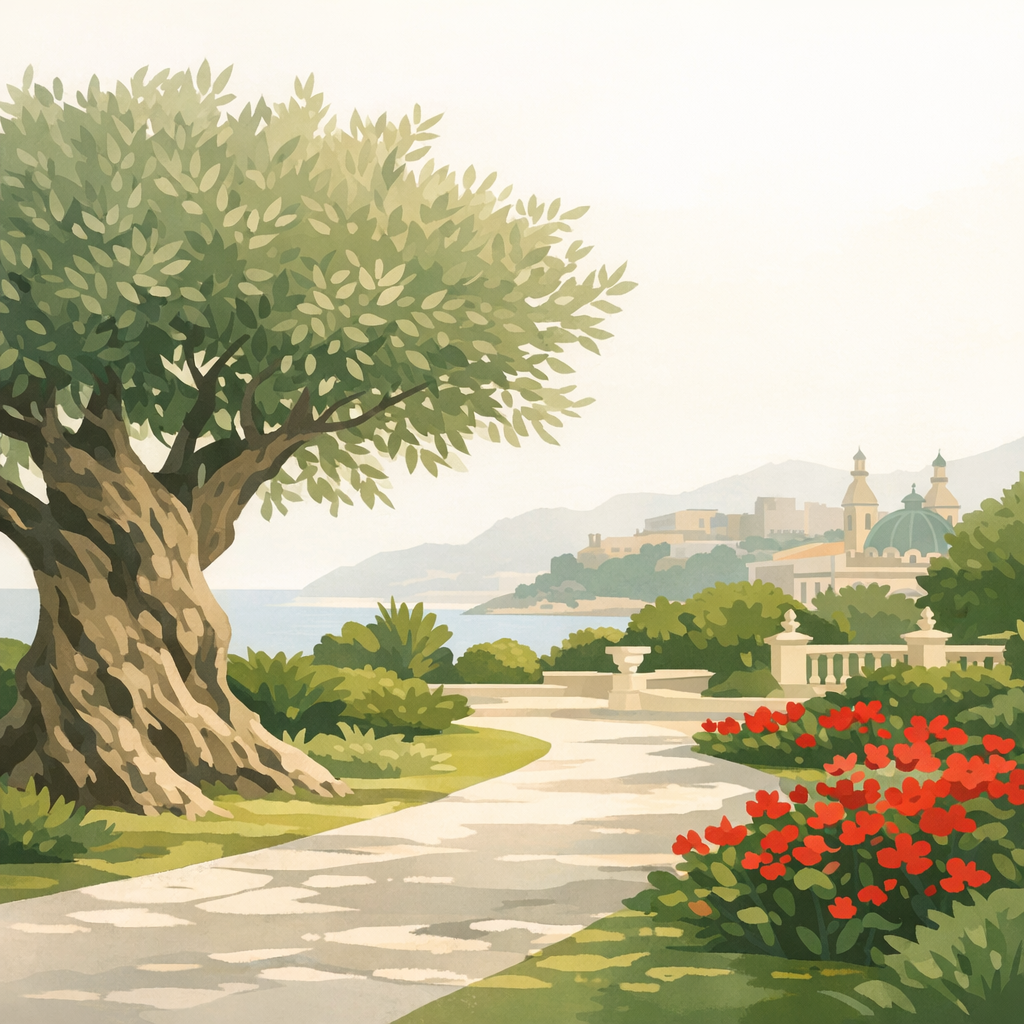
Monaco’s Heritage Tree Trail offers a different way to read the Principality: through old olives, rare botanical specimens and trees that help define a garden, square or neighbourhood. The official route is too rich to treat as a race, so the most rewarding approach is to choose one district and look closely.
What makes a tree part of Monaco’s heritage?
Heritage status is not simply a beauty contest. Monaco’s official guide describes three assessment lenses. The biological criterion considers size in relation to a species’ expected lifespan, with a different calculation for palms. The botanical criterion considers rarity and local presence. A social and environmental criterion also recognises origin, history and the role a tree plays in the identity of a site.
The framework grew from Monaco’s 2011 tree protection measures, followed by the first Heritage Tree Trail in 2013. The official brochure says that more than a thousand trees have received heritage status across the Principality. The walking trail presents a selected group of 92 notable specimens, mapped by district and identified on site.
Monaco is compact but steep. Download the official map, choose a district that fits the rest of your day, and use buses or public lifts when a change of level would distract from the experience.
Choose the right district cluster
Formal gardens and city landmarks
Begin near the Monaco Tourist Office and move through the Petite Afrique gardens towards Casino Square. This cluster suits a first visit because botanical details sit beside familiar architecture. Continue east only if you have time and comfortable shoes.
A green line towards the Japanese Garden
The eastern trail links planted urban spaces with the Japanese Garden area. It is a useful option when your day already includes the seafront, but road crossings and changes of level make the official map more useful than a simple straight-line route.
Rare species on the Rock
Monaco-Ville combines heritage planting with sea-facing public gardens and the historic fabric of the old town. The official visitor account highlights species from very different climates here, making this the strongest cluster for travellers who enjoy comparing botanical origins.
Landscaped parks and an easy pause
Fontvieille brings the route through the UNESCO Gardens, landscaped park and Princess Grace Rose Garden area. Benches, broad paths and the nearby marina make it easy to build a slower botanical walk with frequent pauses.
A practical half-day plan
One cluster, one transfer, one garden finish
- Download the brochure before leaving. Its district maps are designed to be used opposite the species illustrations and notes.
- Choose either east or west. Pair Monte-Carlo with Larvotto, or Monaco-Ville with Fontvieille, rather than crossing the whole Principality repeatedly.
- Use plaques as confirmation. They help distinguish the classified specimen from other mature trees nearby.
- End in a public garden. This leaves time to observe bark, canopy and setting without turning the outing into a checklist.
What to look for beyond the species name
Start with form. Palms, spreading rain trees, sculptural dragon trees and upright conifers shape public space in completely different ways. Then look at context: whether a specimen frames a view, shades a path, anchors a square or marks the transition between dense streets and a garden.
The plaque may give you the identification, but the more interesting question is why that tree belongs there. Some specimens are valued for age or scale, others for rarity, and others because their history has become inseparable from the place around them. That combination is what turns a botanical walk into a way of understanding Monaco’s urban landscape.
Plan respectfully and check the live map
Stay on public paths, do not touch labels or collect leaves, and avoid entering private grounds to reach a mapped point. Planting, access and works can change, so use the current official download as your primary navigation tool. In warm weather, carry water and favour the morning; after rain, allow extra care on sloping or polished surfaces.
This trail also pairs naturally with ViewMonaco’s broader guide to gardens in Monaco. The garden guide helps you choose a longer stop, while the heritage-tree route supplies the close observation between destinations.
Continue exploring Monaco’s green spaces
Use the ViewMonaco garden guide to compare the Japanese Garden, Princess Grace Rose Garden, Saint-Martin Gardens and other landscaped spaces before choosing your next stop.
